Mobile Scanner App - Scan PDF
- 4.7
- Rating
- 10.00M
- Installs
- Free
- Price
 Analysis by App-foxy
I tend to judge a scanning app by what happens after the camera shutter: can I find the document again, read it comfortably, and share it without creating another small task? Mobile Scanner App - Scan PDF, developed by Glority Global Group Ltd., is aimed at that everyday problem. It is a free productivity app for turning paper documents and photos into digital files, and I found its value less in the novelty of scanning than in how it can help replace a messy pile of receipts, forms, notes, and handouts with a repeatable habit.
The app has a 4.6 average from around 101 thousand ratings, with more than 10 million installs. Those figures suggest that it has reached well beyond occasional experimenters, but popularity alone does not make a scanner suitable for everyone. My experience is that it works best when I treat it as the capture stage of a simple document system rather than as a complete replacement for careful filing, editing, or long-term records management.
From paper pile to a workable document routine
Before using a mobile scanner, my usual workflow was predictable: put a document somewhere “safe,” forget which safe place I chose, then search through drawers or camera photos when I needed it. A normal camera can photograph a page, of course, but an ordinary photo often leaves the document mixed in with personal pictures. It may also be sideways, surrounded by a distracting background, or difficult to share as a proper file.
You May Also Like

 Blood Strike: 2.5 Anniversary
Blood Strike’s Loadouts Turn Every Drop Into a Tactical Gamble
A close look at Blood Strike’s custom loadouts: how fast access to signature weapons reshapes its battle royale rhythm, rewards preparation, and narrows the gap between fights.

 Pandora - Music & Podcasts
Pandora’s Music Is Easy to Start, but Harder to Recover
Pandora’s strength is its low-effort path from a seed to a station. Its weak spot is how much confidence it asks you to place in connection, setup, and quiet recovery.

 8 Ball Pool
 Is Built on Rivalries, Rematches, and Routine
A close look at the rivalries, rematches, shared routines, and unanswered safety questions that turn a quick pool match into a persistent mobile community.

 Samsung Music
’s Quiet Strength Is Playing What You Already Own
Its reach comes less from spectacle than from dependable access to a personal library. That simplicity is both the app’s strongest retention engine and its ceiling.

 AccuWeather: Weather Radar
AccuWeather Review: A Quick, Clear Forecast for Everyday Decisions
For everyday plans, the best forecast is the one you can understand quickly. AccuWeather makes rain timing, radar, and local conditions easy to act on, with a few trade-offs.

 Hill Climb Racing
Why Hill Climb Racing Still Turns Crashes Into One More Run
A tiny car, a bumpy hill and one more upgrade: Hill Climb Racing keeps resurfacing because its simple chaos makes every near-miss feel personal.
More From Our News Desk



This is where the app makes sense. Instead of opening the camera first and deciding what to do later, I can begin with the document’s purpose. A receipt for a return, a signed form, a class handout, or a page of handwritten notes can become a PDF during the same short session in which I capture it. That small change matters: the file starts life as a document rather than as an image that I must organize later.
I recommend deciding on a naming and storage habit before scanning a large batch. The app can help create digital copies, but it cannot decide whether a file belongs in a tax folder, a project folder, or a temporary “to send” group. If I scan without that decision, I simply trade a paper pile for a digital pile. A useful routine is to scan, check the page, give it a recognizable name, and immediately share or store it in the place where I will actually look for it.
For a quick one-page task, this feels lighter than opening a desktop scanner or waiting for a multifunction printer. For a stack of important paperwork, I still slow down and review every page. Convenience is strongest when the alternative is postponing the task, not when the alternative is a professional document workflow with dedicated equipment.
Capturing pages without creating more cleanup
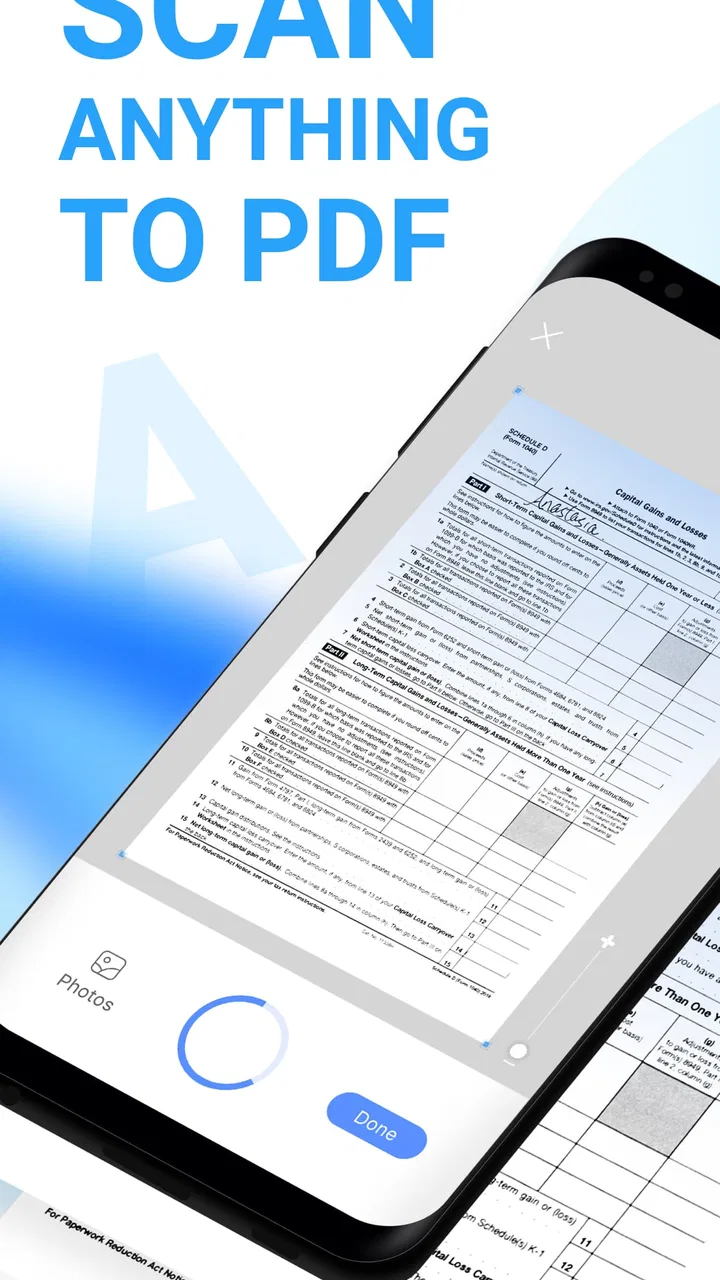
The first practical advantage is having a document-focused camera experience instead of relying on the general photo gallery. I found it useful for pages that need to be sent as PDFs, especially when the recipient expects a file that opens like a document rather than a loose collection of pictures. A scan also encourages me to think in terms of pages and order, which is helpful when a form has several sides or when notes belong together.
Lighting still matters. I get better results when the page is flat, the phone is held reasonably parallel to it, and shadows from my hand stay away from the text. This is not a magic solution for a dark room or a glossy page. If a signature, small number, or faint line is important, I check the result at full size before putting the paper away. The few seconds spent checking are much cheaper than discovering later that the key detail is blurred.
For a multi-page document, I use a consistent surface and capture each page in sequence. I avoid moving the paper between dramatically different backgrounds because visual changes can make the final file feel untidy. The important insight is that scanning quality is partly a preparation problem. The app can make a captured page more usable, but it cannot recover text hidden by glare or a corner covered by a finger.
Photos of documents are also useful when the original paper cannot stay with me. I might photograph a notice on a community board, a warranty label, or a sheet handed out during a meeting. In those cases, the app gives the image a document-oriented destination. I would not use it as my only record for something legally or financially critical without checking the finished file and keeping the original when necessary.
Organization that supports the next action
A scan is successful only when it supports something I need to do next. I try to ask one question immediately: am I keeping this, sending it, or extracting information from it? If I need to send it, I share it while the context is fresh. If I need to keep it, I use a name that includes the subject and month rather than leaving a vague camera-style label. If I only need a number from it, I write that number in my task system instead of assuming I will reopen the scan later.
This approach prevents a common mistake with scanning apps: collecting digital copies without reducing mental clutter. Mobile Scanner App - Scan PDF is most useful when it becomes a bridge between paper and an existing organization method. It does not need to become the place where every piece of information lives. In my workflow, it is the fast intake point; my regular cloud folders, email, or notes area can remain the long-term home.
I also separate temporary scans from records that deserve careful retention. A delivery slip may only need to remain available until a package issue is resolved. A signed agreement deserves a clearer filename and a deliberate storage location. Treating both documents identically creates unnecessary work, while treating both casually can make an important file hard to locate.
One useful habit is to scan related pages in one session, then review the complete PDF before leaving the app. I look for missing pages, accidental duplicates, rotated pages, and unreadable corners. This is a better checkpoint than opening each page weeks later when I am already under pressure to submit it. The app helps with speed, but the quality-control decision still belongs to me.
A repeatable routine for home, study, and work
For home administration, I can see a practical routine around bills, repair paperwork, school notices, and receipts. I keep the phone ready, gather only the documents that need action, scan them, and then move each file to its appropriate destination. The routine works particularly well for people who dislike filing because it makes the first digital copy quick enough to complete immediately.
A realistic example is a return request. I receive a paper receipt, photograph or scan it before it gets buried, check that the transaction details are readable, and send the PDF with the return message. If the issue is resolved, I can remove the temporary copy from my active folder according to my normal storage habits. The app has not solved the entire return process, but it has removed the fragile step of finding the receipt later.
Students can use the same pattern for handouts and handwritten revision pages. I would scan only material that has a clear future use, then group related pages rather than capturing every sheet automatically. This keeps the digital collection manageable. For work, the app is convenient for quick internal paperwork, meeting notes, or documents that need to be sent while away from a desk.
The best routine is short enough to repeat. I would rather scan five relevant pages carefully than create a large archive that I never inspect. A weekly review can also help: open recent scans, rename anything unclear, send pending files, and discard temporary images that no longer have a purpose. That review is a productivity practice around the app, not a feature I expect the app to perform for me.
Because the app is free to download, it is easy to test this routine without committing money at the beginning. Its content rating is Everyone, which makes the basic concept approachable for a broad audience. The app includes in-app purchases ranging from $0.99 to $39.99 per item, so I would pay attention to any upgrade screen and decide whether an added option genuinely fits my workflow before buying.
Where the experience can break down
The biggest failure point is assuming that a phone scan is automatically accurate. A wrinkled page, poor contrast, glare, or an unusual layout can produce a file that looks acceptable in a thumbnail but fails when printed or read closely. I always zoom in on small text and important numbers. For passports, identity documents, contracts, or anything being submitted to an institution, I would follow the recipient’s exact requirements and use a dedicated scanner when the stakes are high.
Another weakness is the phone itself. A low battery, a full storage area, a dirty lens, or notifications interrupting the process can make a simple scan frustrating. I get more consistent results when I clean the lens, use a stable surface, and capture in a quiet moment. That sounds basic, but a scanning workflow is only sustainable if the setup is reliable enough that I do not avoid it.
Multi-page capture deserves special attention. It is easy to move too quickly and forget whether a page was included, especially when documents look similar. I count the pages visually and compare the finished sequence with the original stack. If a page contains information on both sides, I treat each side as a separate capture and verify the order before sharing.
There is also a trade-off between speed and confidence. A quick scan is ideal for a receipt I need to email, but a slower review is justified for a form with several fields. I would not let the convenience of the app encourage me to destroy original paperwork immediately. For records with legal, financial, medical, or identity significance, I keep the original according to the relevant requirement and use the digital copy for access and sharing.
Privacy is part of the same judgment. Scanning a menu or a public notice is very different from scanning a document containing personal information. I use extra care with sensitive pages, share them only with the intended recipient, and avoid creating unnecessary duplicate copies. The app can be useful in a private workflow, but no scanner should replace sensible handling of confidential documents.
How it compares with the alternatives I already use
The closest alternative is the phone’s regular camera. That option is fine when I only need a visual reminder, such as a picture of a product label or a whiteboard that I will reference briefly. Mobile Scanner App - Scan PDF becomes more appropriate when I need a document-shaped result, a sequence of pages, or a file that is easier to send than a camera image. The difference is not that one camera is always sharper; it is that the scanning task has a clearer destination.
A desktop scanner or printer scanner remains better for large batches, consistent office paperwork, and situations where flat, even capture matters more than mobility. If I regularly process many pages, a dedicated device can reduce the need to position a phone repeatedly. The mobile app wins when the document appears unexpectedly, when I am away from the office, or when the friction of using a larger machine would cause me to delay the task.
Cloud storage apps with built-in scanning can be a better fit for someone who already keeps every document inside one particular service. Their advantage is often immediate placement in an established folder system. This app makes more sense for a person who wants a focused scanning tool first and prefers to decide afterward where the resulting PDF belongs.
In other words, I would not call it a universal replacement. It is a practical middle ground between a casual photograph and a full desktop setup. That middle ground is valuable because many everyday documents do not justify specialist equipment, yet they deserve more structure than a loose image in the camera roll.
Who should adopt it, and who should skip it
I would recommend it to students, renters, families, freelancers, and mobile workers who regularly receive paper but do not have a scanner nearby. It is especially useful for people who postpone filing because the first step feels too cumbersome. A quick capture-and-send routine can remove that bottleneck and make document handling less dependent on being at a desk.
It is also a good trial for someone moving from paper habits to a more sustainable digital system. The important condition is willingness to create a simple naming and storage rule. Without that rule, the app may make scanning easier while leaving retrieval just as difficult. I would start with one category, such as receipts or household forms, instead of attempting to digitize an entire archive in one weekend.
I would skip it if my main need is high-volume scanning, strict archival control, or guaranteed professional reproduction. In those cases, a desktop scanner, an organization platform already built into my workplace, or a more specialized document-management solution may be a better investment. I would also skip relying on it alone for documents where a poor capture could cause serious consequences.
Glority Global Group Ltd. has kept the app current at version 2.13.1, and it supports devices running iOS or Android version 9 and later. That makes it accessible to many existing phones, though I would still check how comfortably it runs on an older device before planning a large scanning project. The free entry point lowers the barrier, while the optional purchase range means I would evaluate the app’s everyday usefulness before considering extras.
After using it as part of a broader routine, my opinion is favorable but specific: Mobile Scanner App - Scan PDF is strongest when it turns an immediate paper problem into a finished next action. It is not a substitute for good lighting, careful checking, responsible storage, or a dedicated scanner when precision matters. But for a receipt that needs sending, a form that must be retained, or notes that should stop living in a drawer, it offers a convenient step between physical paperwork and a more organized digital life.
FAQs for Mobile Scanner App - Scan PDF
01What is the Mobile Scanner App - Scan PDF, and how does it work?
The Mobile Scanner App - Scan PDF is a versatile tool that allows users to convert their smartphone into a portable scanner. Using your phone’s camera, it captures images of documents, receipts, or notes and converts them into high-quality PDFs. The app utilizes advanced image processing to enhance clarity and supports multiple file formats for easy sharing and storage.
02Is Mobile Scanner App - Scan PDF free to use, or does it require a subscription?
The Mobile Scanner App - Scan PDF offers a free version with basic features suitable for casual users. However, for those needing advanced functionalities, such as OCR text recognition, cloud storage integration, and batch scanning, a subscription to the premium version is recommended. Pricing details can be found within the app or on the developer’s website.
03How secure is the Mobile Scanner App - Scan PDF for storing sensitive documents?
Security is a priority for the Mobile Scanner App - Scan PDF. The app employs encryption to protect your data both during transfer and while stored on your device. For added security, the app offers password protection for PDFs, ensuring that your sensitive documents remain private and secure from unauthorized access.
04Can the Mobile Scanner App - Scan PDF handle multi-page documents efficiently?
Yes, the app is designed to handle multi-page documents seamlessly. You can scan multiple pages in one go, and the app will automatically compile them into a single PDF file. The batch scanning feature is particularly useful for users who need to digitize lengthy documents quickly and efficiently.
05What devices are compatible with the Mobile Scanner App - Scan PDF?
The Mobile Scanner App - Scan PDF is compatible with both Android and iOS devices. It requires Android version 5.0 or higher and iOS version 11.0 or later. The app is optimized for both smartphones and tablets, ensuring a smooth and user-friendly experience across different devices.
Pros
- Fast scanning and processing.
- High-quality PDF output.
- User-friendly interface design.
- Supports multiple document types.
- Integrates with cloud services.
Cons
- Occasional ads can be intrusive.
- Limited features in free version.
- OCR accuracy varies by language.
- Requires internet for some features.
- Subscription can be pricey.

Mobile Scanner App - Scan PDF
Gallery